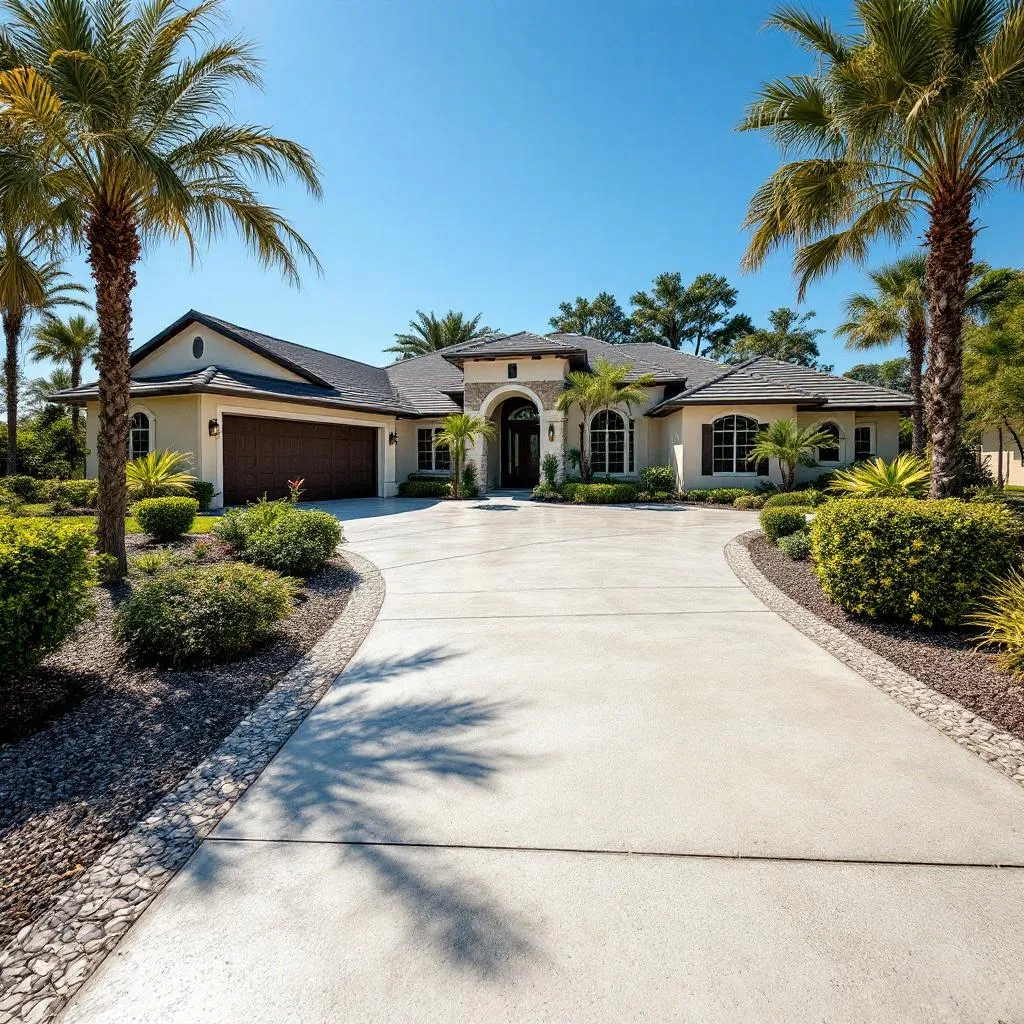
Concrete vs Asphalt: Which is Better for Florida's Climate?

The Florida Driveway Dilemma

When it comes to choosing a driveway material in Florida, homeowners often find themselves weighing the classic debate: concrete versus asphalt. While both materials have their merits, Florida's unique climate conditions make this decision particularly important for your new driveway installation.

In this comprehensive guide, we'll examine how each material performs under Tampa Bay's intense sun, heavy rainfall, and occasional tropical storms to help you make the best choice for your home.

The Bottom Line for Florida Homeowners

For most Florida homes, concrete is the superior choice due to its heat resistance, longer lifespan, and lower long-term maintenance costs. However, asphalt can be appropriate for certain situations where initial cost is the primary concern.

Head-to-Head Comparison

Let's break down the key factors that matter most for Florida driveways:

Factor Concrete Asphalt
Initial Cost $7-12/sq ft $4-7/sq ft
Lifespan 30-40 years 15-20 years
Heat Performance Stays cooler, reflects heat Absorbs heat, can soften
Maintenance Minimal - occasional sealing Regular sealing every 2-3 years
Appearance Options Many colors, stamps, finishes Limited to black/dark gray
Stain Resistance Good with sealer Absorbs oil stains
Hurricane Resistance Excellent Good
Home Value Impact Higher ROI Standard

Heat Performance: The Florida Factor

This is perhaps the most critical consideration for Florida homeowners. Here's why concrete has a significant advantage:

Asphalt in Florida Heat

Asphalt is a petroleum-based product that absorbs and retains heat. In Tampa, where summer surface temperatures can exceed 150 degrees Fahrenheit, asphalt driveways:

  • Can become soft and pliable on the hottest days
  • May develop ruts and depressions from parked vehicles
  • Require more frequent repairs and maintenance
  • Transfer heat to your home and surroundings
  • Can be uncomfortable or dangerous to walk on barefoot

Concrete in Florida Heat

Concrete reflects rather than absorbs solar radiation, making it a better choice for hot climates:

  • Stays up to 30 degrees cooler than asphalt on hot days
  • Maintains structural integrity regardless of temperature
  • Never softens or becomes pliable
  • Lighter colors available for maximum heat reflection
  • Contributes to cooler overall property temperature

Did You Know?

Light-colored concrete driveways can be up to 50 degrees Fahrenheit cooler than dark asphalt on sunny Florida afternoons, reducing the "heat island" effect around your home.

Pros and Cons Summary

Concrete Driveways

Advantages

  • Longer lifespan (30-40 years)
  • Better heat resistance
  • Lower maintenance requirements
  • More design options
  • Higher property value
  • Doesn't soften in heat
  • Better stain resistance when sealed

Disadvantages

  • Higher initial cost
  • Longer installation time
  • Cracks more visible
  • Repairs can be noticeable
  • Requires curing time before use

Asphalt Driveways

Advantages

  • Lower initial cost
  • Faster installation
  • Easier to repair
  • Good for cold climates
  • Usable within 24-48 hours

Disadvantages

  • Shorter lifespan in Florida
  • Softens in extreme heat
  • Requires sealing every 2-3 years
  • Limited color options
  • Absorbs and holds heat
  • More susceptible to oil stains
  • Can develop ruts from parked cars

Long-Term Cost Analysis

While asphalt has a lower upfront cost, let's look at the true cost of ownership over 30 years for a typical 500 square foot driveway:

Concrete (30-Year Cost)

  • Initial installation: $4,500
  • Sealing every 5 years (5x): $750
  • Minor repairs: $500
  • Total: $5,750

Asphalt (30-Year Cost)

  • Initial installation: $2,750
  • Sealing every 3 years (10x): $2,000
  • Replacement at year 15: $3,000
  • Additional sealing years 15-30 (5x): $1,000
  • Repairs and patching: $1,000
  • Total: $9,750

As you can see, despite the higher initial investment, concrete saves approximately $4,000 over 30 years while providing a better-looking, more durable surface throughout its lifetime.

Florida-Specific Recommendations

Based on our experience serving Tampa Bay homeowners, here are our recommendations:

Choose Concrete If:

  • You plan to stay in your home long-term
  • You want minimal ongoing maintenance
  • Curb appeal and home value are priorities
  • You want decorative options like stamping or staining
  • You frequently park in the same spot (RVs, boats)
  • You have children who play outside barefoot

Consider Asphalt If:

  • You're on a very tight budget
  • You plan to sell the home soon
  • You need a temporary driveway solution
  • The driveway is rarely used for parking

Making Your Decision

For most Tampa Bay homeowners, concrete is the clear winner. Its superior performance in Florida's heat, longer lifespan, and lower long-term costs make it the smart investment for your property.

At Tampa Concrete Pros, we specialize in high-quality concrete driveways designed specifically for Florida's climate. We use the right concrete mix, proper reinforcement, and expert installation techniques to ensure your driveway stands up to Tampa's heat and weather for decades to come.

Ready to discuss your driveway project? Call us at (813) 555-2847 for a free consultation and estimate.

TCP

Tampa Concrete Pros

Tampa Bay's trusted concrete contractors with over 10 years of experience. Licensed, insured, and committed to quality workmanship on every project.

Ready to Choose Concrete?

Get a free, no-obligation quote for your concrete driveway. Our team will help you select the perfect design for your Tampa home.

Call (813) 555-2847