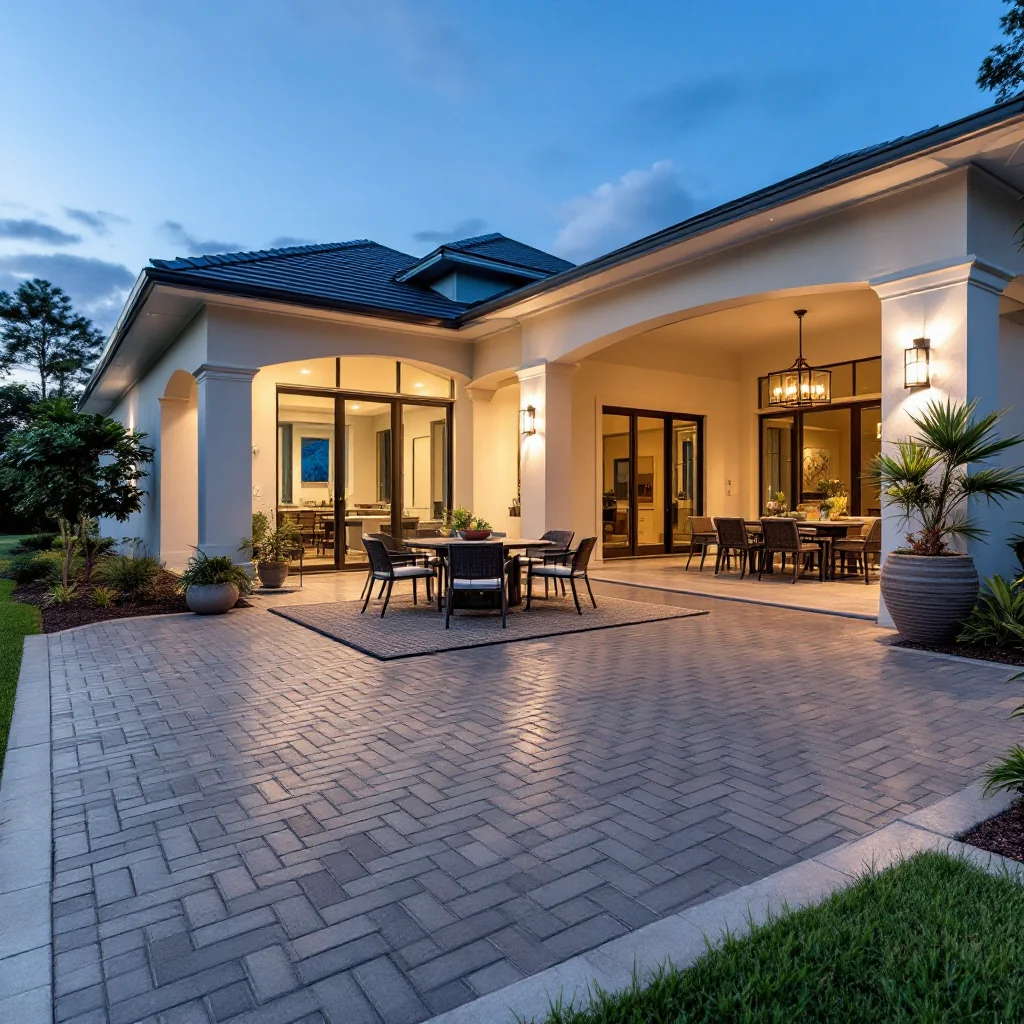
The Great Debate: Stamped Concrete or Pavers?
If you're planning a new driveway, patio, or pool deck in Tampa, you've likely encountered the stamped concrete vs pavers debate. Both options offer attractive, durable surfaces that can transform your outdoor spaces, but they differ significantly in cost, installation, maintenance, and how they perform in Florida's challenging climate.
After installing hundreds of driveways and patios throughout Tampa Bay, we've seen firsthand how each option performs. This guide breaks down everything you need to know to make the right choice for your home.
According to HomeAdvisor, stamped concrete costs 30-50% less than pavers for most residential projects, while offering comparable aesthetic appeal and durability when properly installed and maintained.
Source: HomeAdvisor 2025 Cost GuideCost Comparison: Stamped Concrete vs Pavers
For most Tampa homeowners, cost is a deciding factor. Here's how the two options compare:
| Cost Factor | Stamped Concrete | Pavers |
|---|---|---|
| Material Cost | $12-20/sq ft | $15-30/sq ft |
| 500 sq ft Patio | $6,000-10,000 | $7,500-15,000 |
| Installation Time | 1-2 days | 3-5 days |
| Sealing (every 2-3 years) | $0.50-1.00/sq ft | $0.25-0.50/sq ft |
| Repair Costs | Patch visible ($200-500) | Replace individual pavers ($50-150) |
The Bottom Line on Cost
For a typical 600 sq ft driveway in Tampa, expect to pay $7,200-12,000 for stamped concrete versus $9,000-18,000 for pavers. The savings with stamped concrete are substantial, especially for larger projects.
Durability in Florida's Climate
Florida's weather presents unique challenges: intense UV exposure, heavy tropical rainfall, high humidity, and occasional freezing temperatures. For a deeper dive into how these factors affect concrete, see our guide on how Florida's climate affects your concrete. Here's how each option handles these conditions:
Stamped Concrete in Florida
- Heat resistance: Lighter colors reflect heat, staying cooler than dark pavers
- Rain drainage: Continuous surface prevents weed growth between joints
- UV exposure: Requires sealing every 2-3 years to maintain color
- Cracking: May develop hairline cracks over time (mostly cosmetic)
- Lifespan: 25-30+ years with proper maintenance
Pavers in Florida
- Heat retention: Some materials (especially dark colors) can get very hot
- Rain drainage: Joints allow drainage but also weed growth
- UV exposure: Colors may fade but generally hold up well
- Shifting: Sandy Florida soil can cause settling and unevenness
- Lifespan: 25-50+ years depending on material quality
In Tampa's sandy soil conditions, paver installations may require additional base preparation to prevent shifting and settling. This can add $2-4 per square foot to installation costs.
Source: Tampa Bay area contractor estimatesMaintenance Requirements
Stamped Concrete Maintenance
- Seal every 2-3 years ($0.50-1/sq ft)
- Pressure wash annually
- No weed control needed
- No ant hills or joint issues
- Cracks may require patching
Paver Maintenance
- Seal every 3-5 years (optional)
- Regular weed control in joints
- Re-level shifted pavers
- Replace joint sand periodically
- Individual pavers easy to replace
Aesthetic Options
Both stamped concrete and pavers offer extensive design flexibility:
Stamped Concrete Patterns
Stamped concrete can replicate virtually any natural material:
- Ashlar slate (most popular in Tampa)
- Cobblestone and brick patterns
- Flagstone and natural stone
- Wood plank patterns
- Custom designs and borders
Color options are nearly unlimited with integral colors and stains.
Paver Options
- Brick pavers (traditional look)
- Concrete pavers (most affordable)
- Natural stone (premium option)
- Travertine (popular for pool decks)
- Permeable pavers (eco-friendly)
Pro Tip: Pool Deck Consideration
For pool decks in Tampa, stamped concrete with a cool deck coating is often the best choice. It stays up to 20 degrees cooler than standard concrete or pavers and provides excellent slip resistance when wet.
Which Should You Choose?
Choose Stamped Concrete If:
- Budget is a primary concern
- You want a seamless, continuous surface
- Low maintenance is important to you
- You're installing a pool deck (with cool deck option)
- You want the look of stone without the price
Choose Pavers If:
- You prefer easy individual repairs
- You want a truly "natural" material
- Your home's architecture calls for a specific paver style
- You're willing to invest in premium aesthetics
- Permeable surfaces are required by your HOA or local codes
Frequently Asked Questions
Is stamped concrete cheaper than pavers?
Yes, stamped concrete typically costs $12-20 per square foot compared to $15-30 per square foot for pavers. For a 500 sq ft patio, you could save $1,500-5,000 by choosing stamped concrete over pavers.
Which lasts longer in Florida: stamped concrete or pavers?
Both can last 25-30+ years with proper maintenance. Stamped concrete may develop hairline cracks over time, while pavers can shift or settle. In Florida's climate, stamped concrete with proper sealing often performs better due to less weed growth and fewer shifting issues from sandy soil.
Can stamped concrete look like real pavers?
Modern stamped concrete can closely replicate the look of brick, stone, and cobblestone pavers. While trained eyes can spot the difference, most homeowners and guests find stamped concrete indistinguishable from real pavers at a fraction of the cost.
Does stamped concrete crack in Florida heat?
All concrete can develop minor cracks over time, but properly installed stamped concrete with control joints minimizes visible cracking. Florida's heat actually helps concrete cure well. The main concern is UV damage to the sealer, which is why resealing every 2-3 years is recommended.