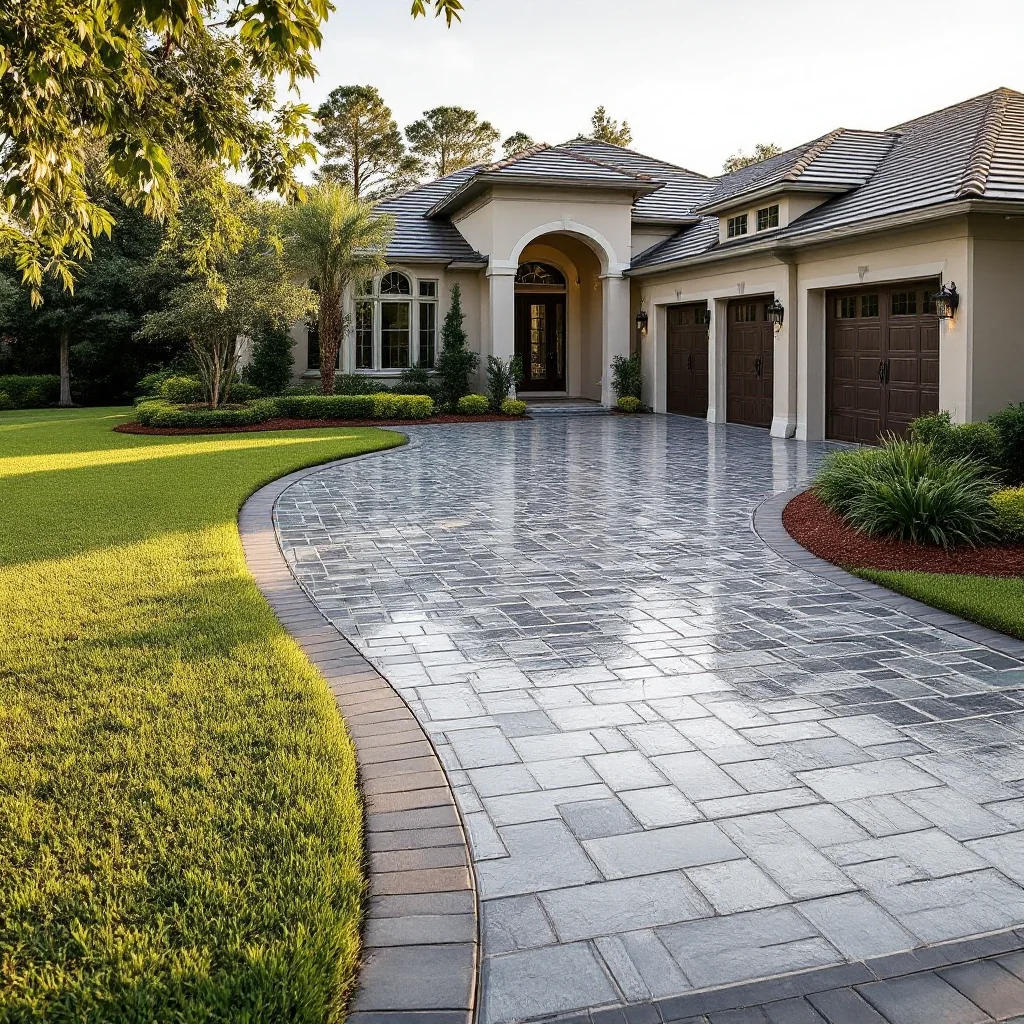
How Florida's Climate Affects Your Concrete

Florida's unique climate presents specific challenges for concrete driveways. Understanding these factors helps you make informed decisions about installation and maintenance.

Florida's subtropical climate creates conditions that differ significantly from other parts of the country. The combination of intense heat, high humidity, frequent rain, and occasional severe weather all impact how concrete performs over time.

Intense Heat & UV Exposure

Tampa's average summer temperatures regularly exceed 90°F, and concrete surface temperatures can reach 150°F or higher. This extreme heat causes thermal expansion, which can lead to cracking if the concrete wasn't properly installed with adequate control joints.

UV radiation also breaks down the concrete surface over time, causing fading and surface deterioration. Light-colored or reflective finishes help reduce heat absorption and surface temperature.

Pro Tip: Schedule concrete pours for early morning during summer months. This gives the concrete time to cure before the hottest part of the day and reduces the risk of rapid moisture loss.

High Humidity

Florida's humidity levels often exceed 70%, which affects concrete in several ways. High humidity slows the curing process, requiring longer wait times before the driveway can be used. It can also contribute to efflorescence—white mineral deposits that appear on the surface.

On the positive side, humidity helps prevent too-rapid drying during the initial curing period, reducing the risk of surface cracks.

Heavy Rainfall

Tampa receives an average of 46 inches of rain annually, much of it during intense summer storms. Proper drainage is critical—standing water accelerates concrete deterioration and can undermine the base material.

The driveway must be properly sloped (typically 1/8" to 1/4" per foot) to direct water away from your home's foundation. Inadequate drainage is one of the primary causes of premature driveway failure in Florida.

Florida-Specific Installation Best Practices

Professional contractors in Florida adapt their methods to account for local conditions:

Maintenance for Florida Conditions

To maximize your driveway's lifespan in Florida's climate:

  1. Seal regularly: Apply a quality concrete sealer every 2-3 years to protect against moisture and UV damage
  2. Keep it clean: Remove organic debris that can trap moisture and promote mold growth
  3. Address cracks promptly: Small cracks should be sealed before water infiltration causes larger problems
  4. Maintain drainage: Keep edges clear of soil buildup that can impede water runoff

Need Expert Advice for Your Tampa Property?

Our team understands Florida's unique climate challenges. Get a free consultation on your concrete project.

Call (813) 555-2847